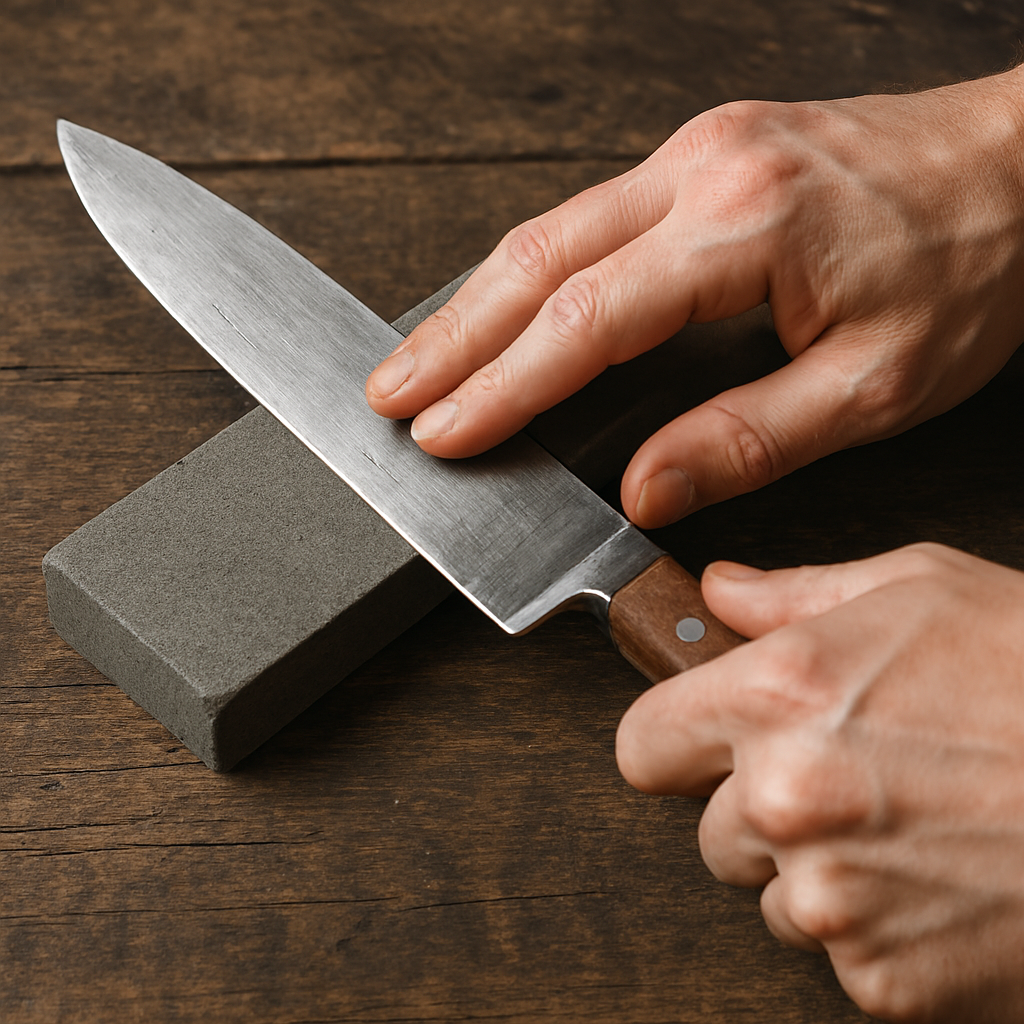
A sharp knife is safer to use and far more enjoyable while working in the kitchen, especially when the time is too short and a lot of work is pending in the kitchen and guest are about to come or early morning, school time for children, and husband's office time is too close. If you have a serrated knife, then it's complex and not safer. While working with a serrated knife, frustration can lead to injuries.
In this guide, you'll learn everything about the professional sharpening of kitchen knives and to sharpen a Pocket knife.
Best Tools are
- Whetstone (Waterstone)
Ideal for Chefs, Best for control and finishing
- Diamond Sharpening Rod
Great for serrated knives and quick edge restoration.
- Ceramic Honing Rod
Good for daily maintenance and straight edges.
- Manual pull-through sharpener
If you are a beginner, then its easy and fast.
- Electric sharpener (Chef's Choice models)
If you want something fast, repeatable, and excellent, then its good for busy kitchens.
The main rule in this is Safety First.
- Always keep your body away.
- Secure the blade and tools.
- Always use finger guards and go slowly because speed causes slips and will become too dangerous.
Whetstone method
If you want a long-lasting, factory style edge, then Whetstones is the best way to sharpen a knife; it gives control and an excellent, final edge.
Soak or prep the stone (if required). Many water stones need 5–10 minutes in water; synthetics may differ — check the stone instructions.
Set the angle. Visualise the angle or use a guiding tool. Most Western knives use about 20° and Japanese knives almost 15°.
Start with coarse grit for dull blades. Hold the blade at the chosen angle and push the heel across the stone to the tip in an arc, maintaining the angle.
Repeat on the other side until you feel a burr running along the blade.
Switch to finer grits to refine and polish the edge.
Hone lightly on a ceramic rod or leather strop to remove any remaining burr.
Tip: Count strokes to keep both sides balanced (e.g., 10 strokes per side), then refine with fewer, lighter passes.
Which to pick?
(electric vs stones)
- If you want the best finish and a learning curve, then pick Whetstone.
- If you want faster, user-friendly and consistent results, then go for Chef's Choice, which is Electric.
How to check sharpness
Commercial Knife Sharpness testers are available in the market, but you can also test them at home with the Paper Test method and the Tomato Test method.
Paper test method: Hold a sheet of printer paper and slice downward. If the knife cuts it cleanly without snagging, then it passes the sharpen test.
Tomato test method: If the tomato slice is clean without pushing the tomato, then it passes the sharpen test.
Where to purchase the best knife sharpener for kitchen knives
use below links to purchase from reputable and trusted sellers
Tungsten Steel Multi functional 4-Stage Sharpener Manual Sharpener, Small Tool, for Kitchen Knife
🎉 Coupon price[Rs.1,169]
👉 item link: https://temu.to/k/eav17klf3b5
⚠️ The discount may vary, please refer to the page display.
4-Stage Professional Knife Sharpener | High-Precision Whetstone, Diamond, and Ceramic Sharpening Stone with Non-Slip Grip | Easy to Use, Fast Sharpening, Long-Lasting Performance | Suitable for Father'S Day | Brand: WONGIRL
🎉 Exclusive deal[Rs.202]
👉 item link: https://temu.to/k/ekaeb3w9p5i
⚠️ Every New App User can only enjoy once
⚠️ The discount may vary, please refer to the page display.
FAQ
Q: How often should you sharpen your kitchen knives?
A: It depends on use. For home, weekly or monthly depending on dullness.
Q: Can you sharpen serrated knives at home?
A: Yes you can sharpen serrated knives at home.
Q: What is the best sharpener for kitchen knives and where to Purchase?
A: Links for reputable firms are mentioned above for safe and quality purchase.