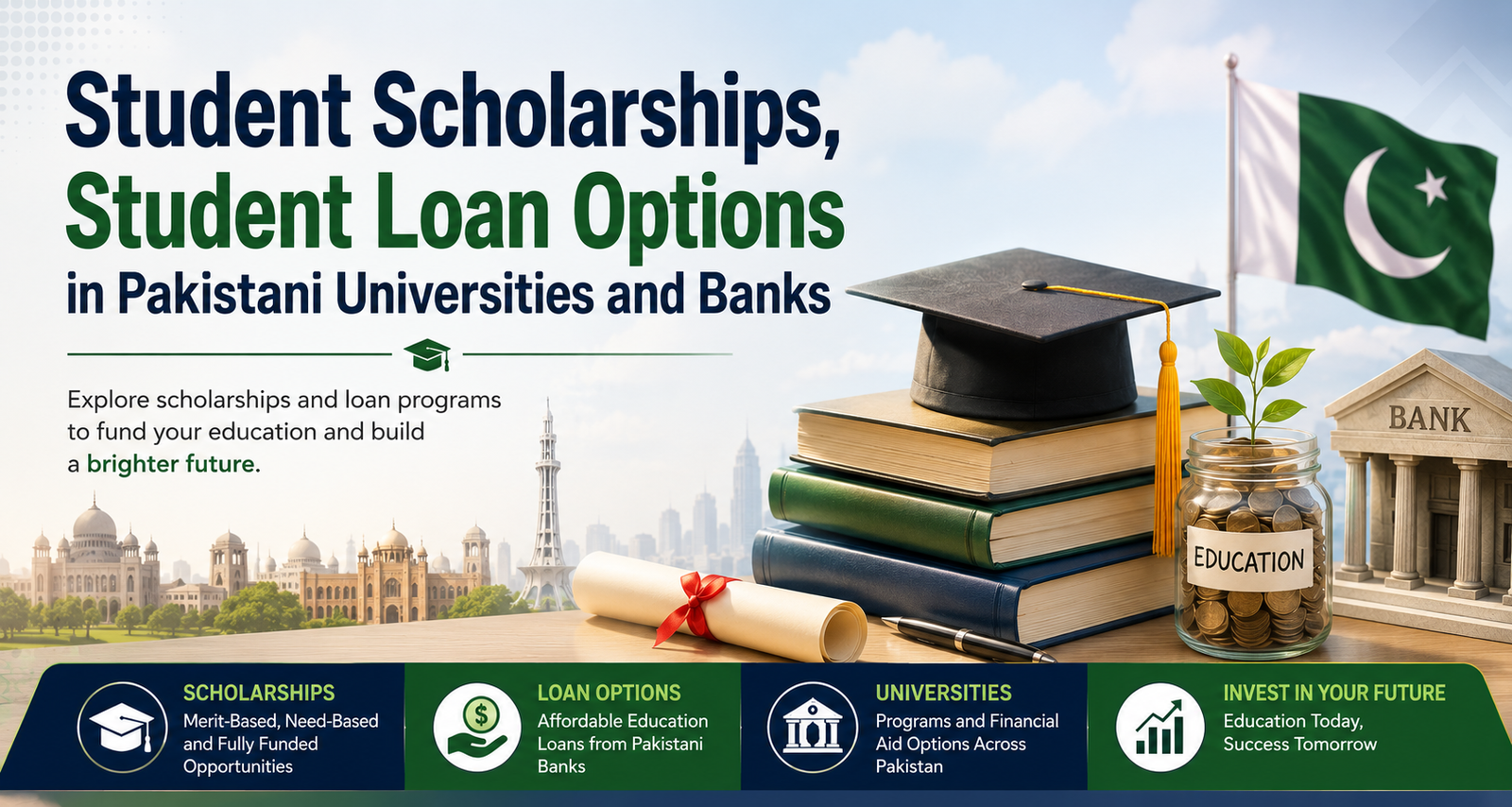
Pursuing higher education in Pakistan has become increasingly expensive, placing it beyond the reach of many middle-class families. Significant rise in tuition fees, hostel charges, transportation, books and other miscellaneous educational expenses put significant financial pressure on middle class parents and students. For better education, families with low and fixed income, cutting down there essential house hold expenses and the same time most of the families cannot afford quality education for their deserving intelligent children’s.
Many deserving students are unable to continue their education, not only because of low family income but also because of lack of information about scholarships, bank loans and affordable colleges & universities with a remarkable educational facilities. This challenge is particularly significant for girls from middle-class families who may face additional social and family related barriers. As a result, talented deserving students give up their study which is a great loss to their families as well as for country.
Better awareness of student loans, student scholarship programs and other assistance is deemed necessary. In this regard, awareness programs and student counselling must be the part of Government preferences which is unfortunately not is in the priority list of the Governments from the Independence to till date. Precedence makers in Governments are not focusing in quality education for the children’s of poor families.
Financially stable families can afford expensive schools, colleges and universities. These rich families can easily arrange other educational resources for their children’s which provides access to modern learning methods.
Differences in access to educational facilities based on economic background create a significant gap in the quality of education received by students from different social classes. Meanwhile, talented students from poor and middle class families may struggle to find similar opportunities despite having the ability and potential to succeed. As these differences continue to grow, the educational and economic gap between different sections of society is also spreading.
If we want strong and prosperous Pakistan, there is a need to ensure affordable, accessible and quality education for every student, irrespective they belongs to which class.
Fortunately, a lot of Banks having their own bank loan programs for student and scholarships programs in Universities.
How students can apply for student financing options and attain their benefits. Some details are listed below for information, more is available throughout the country. Students and Families must research about these options and must adopt which is feasible to them as per there on ground positions.
University Financial Aid and Loan Programs
- LUMS (Lahore University of Management Sciences) – Offers need-based financial aid including interest-free tuition loans for undergrad and graduate students. The loan can cover up to 100% of tuition, with repayment starting 6 months after graduation and flexible installments over 5 years.
- IBA Karachi (Institute of Business Administration) – Through its Financial Aid Office, IBA helps students access Qarz‑e‑Hasna (interest-free) loans via external partners. Eligible full-time students with strong academics and financial need can apply after admission. These loans cover tuition and are repaid in flexible installments.
- Ihsan Trust (NGO) – A nonprofit providing interest-free educational loans through partner universities across Pakistan. Applicants must be Pakistani, meet academic merit, and apply via their university’s financial aid office. (Loans are disbursed directly to the school and repaid by students after graduation)
Government and NGO Loan Schemes
- Pakistan Education Endowment Fund (PEEF) – Government-endorsed NGO offering interest-free overseas study loans (Qarz‑e‑Hasna) to talented, low-income students admitted to QS Top-25 universities. Covers tuition, a living stipend, travel and insurance. Repayment is required (over up to 10 years after study) but with zero interest. Applicants must be Pakistani (no dual nationals), meet merit and financial-need criteria, and provide a guarantor.
- SBP’s Higher Education Financing Scheme (HEFS) – An SBP-administered program (often via NBP and other banks) that historically offered up to PKR 300,000 interest-free (mark-up-free) loans for tuition, books, and boarding. (Official details are scarce online, but this program assisted many students at public institutions in the past.)
- Prime Minister’s Educational Loan (current) – The government has relaunched an interest‑free student loan scheme (Qarz‑e‑Hasna) for needy/higher education students via participating banks. Under this, commercial banks like NBP/HBL/UBL channel mark‑up‑free loans; specifics vary, so check SBP/HEC announcements for the latest terms.
- Vocational Training Loans (TEVTA/NAVTTC) – Subsidized programs exist for technical and vocational students. For example, TEVTA Punjab (in partnership with Bank of Punjab and First Women Bank) provides interest-free loans to low-income students in TEVTA-certified diploma programs. Eligibility typically includes age 18–35 and income criteria. Applications are through official TEVTA portals.
Bank Education Loan
Many commercial banks offer education loans to Pakistani students, both for local and overseas study. These products usually have competitive markup rates, require collateral above certain limits, and involve similar documentation. Below are examples (figures subject to change, always confirm on banks’ sites):
- Askari Bank – Askari Education Loan.
- HBL – HBL Student Financing.
- MCB Bank – Student Personal Loan.
- Bank of Punjab (BOP.
- United Bank (UBL) –Study Loan.
- Alfalah Bank – Alfalah Education Loan.
- Standard Chartered Bank – SCB Education Finance Plan.
- Islamic Banks (Meezan, BankIslami, AlBaraka) – Offer Shariah-compliant education finance (Qarz-e-Hasna or Murabaha) with no interest.
How to Apply: Checklist & Tips
Step-by-Step:
1. Research & Shortlist: Identify loans matching your profile (undergrad vs. postgrad, local vs. abroad).
2. Meet Eligibility: Note marks, age, admission status, and any income cap.
3. Documents Ready: Gather CNIC, admission letter, transcripts, fee schedule, bank statements, income proof, guarantor’s documents (if needed).
4. Application Submission: For bank loans, visit the bank or apply online with the application form and docs. For university/Qarz loans, apply via the campus Financial Aid Office by the deadline. For government schemes (PEEF, SBP), apply on their portal.
5. Follow Up: Keep copies, note reference numbers, and check status. Prepare for possible interviews or clarification requests.
6. Loan Disbursement: Once approved, confirm funds sent to the university or account. Attend orientation on repayment terms.
FAQs
- Do I need collateral? Usually yes for bank loans above a certain amount (often PKR 500k+). Collateral could be property or fixed deposits. Government/interest-free schemes may only need a guarantor.
- Is interest-free really free? Yes, if marked interest-free/Qarz-e-Hasna, you repay only the principal over time (often via token installments).
- How long before repayment starts? Most loans offer a grace period (6–12 months post-graduation or end of studies). Check terms & Conditions.
- Can I apply before getting admission? No – generally you need an admission letter to apply for a student loan.
- What if I study abroad? Few domestic banks finance foreign degrees. Instead, consider EduFi, PEEF, Prodigy Finance or MPower loans designed for international study.
- What about scholarships? Scholarships (e.g. HEC/Ehsaas) are ideal as they don’t require repayment. Loans should be a last resort if scholarships aren’t enough.
Note: This is general information, terms and conditions, loan amount can be changed. Must visit and refer to the latest policy each bank and university has.