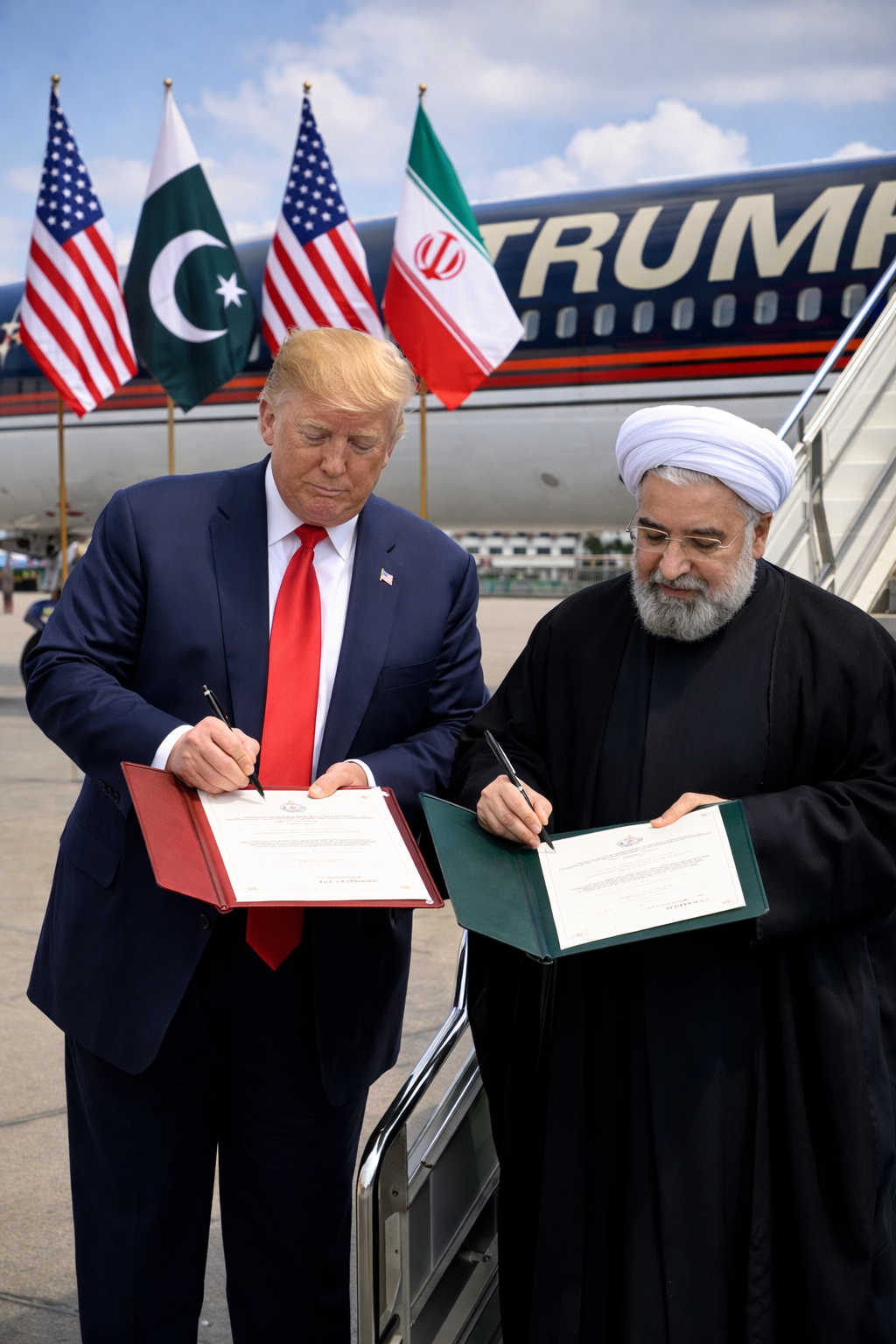
President Trump announced an unexpected breakthrough U.S. and Iran ceasefire agreement, administrated by Pakistan and Qatar, which should end the recent conflict in the Middle East. After the 60 days Islamabad negotiations which was face to face negotiations, which has no fruitful result, Iran agreed to stop combat operations and will clear mines from the Strait of Hormuz and allows naval traffic to pass, while the U.S. lifted its naval blockade and granted limited sanctions waivers so Iran could resume oil exports. All this are performed by both Governments to restore trust which was millions of miles away.
However, Israel attacks on Lebanon at one day before from the deadline, messed up all, Iran Government, stops his delegation just before departure who is ready for Switzerland due to violation of the first clause of MOU.
Main part of concerned for Trump and US Government is Irans nuclear programs, Negotiations on Iran’s nuclear program are in the next step of dialogues during the ceasefire which was announced and going to signed by both Governments under the hospitality of Pakistan Government on 19th of June 2026. If Iran delivers on its commitments and gains President Trump trust, it helps Iran to gain significant sanctions relief and an economic boost.
In all this story, Pakistan, as mediator, will gain a lot of diplomatic and economic benefits, especially stronger relation with both Governments U.S. and Iran and will expand his legal trade especially with Iran. Specially, Iran and Pakistan Gas pipeline which was in the middle but stopped by Government of Pakistan due to US sanctions.
For the U.S, which has lost most of his valuable combat assets and has high war cost due to dynamic changes, this deal results lower global oil prices and economic boost in some countries, but some strategic questions remains same and unanswered. Both countries intelligence network exists in the deep roots of Iran Government and Army institutions, However, One of the main question is why Intelligence agencies of Israel and US has failed to determine the actual capabilities and strategies of Iran’s Military wings.
Deal Overview and Timeline of Key Events
The U.S. and Iran 2026 deal, sometimes labeled as the “Islamabad Agreement”, is a framework ceasefire MOU announced by President Trump on June 15, 2026. It builds on a fragile ceasefire from April and was negotiated primarily in Pakistan. Key Points of deal are as under:-
The Strait of Hormuz, will be reopened immediately without any Toll tax and as in the previous status and Iran has to remove naval mines, and on other side, U.S. lifts its naval blockade and allows ships to move easily and Iran can freely sell oil in International Market. In exchange, Iran commits not to follow nuclear weapons and to begin negotiations on suspending its uranium enrichment. It is pertinent to mention that US wants to shifts existing enriched uranium stocks from Iran to US but still Iran not want to shift there uranium stock to some other country.
U.S. President Trump stated in lot of media conversations that “Any additional sanctions, relief and the release of frozen Iranian financial assets are conditioned on Iran’s compliance.
The following timeline highlights major milestones:
Timeline of the Trump–Iran 2026 Peace Deal – key events leading to the signing of the memorandum of understanding (sources: U.S. and Pakistani official statements).
Feb 28, 2026: U.S. and Israeli forces launch strikes on Iran, igniting the conflict. Global concern mounts as oil shipments via Hormuz are disrupted.
Apr 8, 2026: A two-week U.S.–Iran ceasefire begins under Pakistani mediation. International leaders call for a diplomatic pause.
Apr 11, 2026: U.S. Vice President Vance arrives in Islamabad for talks with Pakistani and Iranian officials. Pakistan emerges as a key mediator for the crisis.
Apr 25, 2026: Pakistan’s Prime Minister Shehbaz Sharif hosts Iranian Deputy FM Abbas Araghchi in Islamabad, signaling progress in negotiations.
May 23, 2026: U.S. officials indicate that a peace MOU is near, with commitments from Iran to reopen Hormuz and pause its nuclear program. President Trump delays planned military strikes, hinting a deal is imminent.
June 12, 2026: Pakistani PM Sharif announces that the final text of the U.S.–Iran peace deal is agreed upon, with a signing ceremony expected soon.
June 15, 2026: President Trump declares on social media that the “Deal with Iran is now complete” and confirms the Hormuz Strait will reopen this week. A signing event is scheduled for June 19 in Switzerland which was now postponed.
Key Terms of the Deal
Ceasefire Extension: The MOU establishes a 60-day ceasefire which is extendable with mutual consent and termination of hostilities across all fronts, including Lebanon. During this period, neither side will attack the other.
Hormuz Reopened: Iran will clear its mines from the Strait of Hormuz and allow ship passage with no tolls. The U.S. will lift its naval blockade and embargo on Iranian ports. According to Trump, the moment Iran clears mines, the “blockade will be lifted”.
Oil Sales and Sanctions: The U.S. will issue sanctions waivers that let Iran freely sell its oil again. This immediate sale of oil is expected to boost Iran’s economy substantially. However, any broader sanctions relief or release of frozen funds will happen only after Iran shows tangible compliance with its commitments. Trump has emphasized “relief for performance.” Iran had demanded immediate cash and permanent relief but the U.S. insists those come later, step-by-step.
Nuclear Commitments: Iran has verbally promised in dialogues that not to pursue a nuclear weapon. The MOU says Iran will begin negotiating a suspension of uranium enrichment and the removal of its highly enriched uranium. These nuclear issues will be finalized after long discussions in a definitive follow on treaty beyond the initial 60-day pause. U.S. forces will remain in place during this period, withdrawing only if a final deal is reached.
Regional Security: The MOU also referred to a ceasefire in the Israel and Hezbollah conflict in Lebanon. Israel has voiced concerns, due to which he attacks again on Lebanon and resulting to damage in negotiations.
Benefits to Iran
The deal proposals Iran vital economic and diplomatic benefits. Opening the Strait of Hormuz and lifting the U.S. naval blockade immediately restores Iran’s ability to export oil and earn revenue. Economical Analysts stated that allowing Iranian oil to sale will immediately boost Iran’s economy and also release tension in global markets. Over the 60-day period, Iran expects conditional sanctions relief. In practice, that could mean unfreezing some blocked assets and free to trade in International Markets.
In last decade, due to restrictions on Iran, Iran grows up as products on his own resources and it is observed that Iran’s products are good in quality. After lifting up of sanction, exporting these products will strong Iran economy.
Benefits to Pakistan
Pakistan’s role as mediator in this deal earned both diplomatic status and practical benefits. Analysts note that Pakistan’s security and economic interests motivated its push for peace. If the war expanded, its long 1,000 km border with Iran and heavy dependence on Gulf oil, Pakistan will lose large.
Now after the uplifting of ban on Iran, Pakistan will complete there Gas Project, Improves there legal import of Iran’s petroleum which is cheaper than others and also trade in Chinese currency Yuan.
Implications for the United States
For the U.S., the deal primarily de‑escalates a costly conflict and stabilizes global energy markets. After U.S. President Trump’s announcement, Brent crude fell 10%. Americans will also takes benefit from cheaper gasoline and lower inflationary pressure. Removing the threat to global supply chain decreases pressure on the global oil supply.
On the other hand, a ceasefire reduces war costs and risks for U.S. forces deployed in the region. According to administration officials, U.S. troops will stay more there until completion of final deal.
Now, next 60 to 90 days will confirm whether this peace process continues or fails.